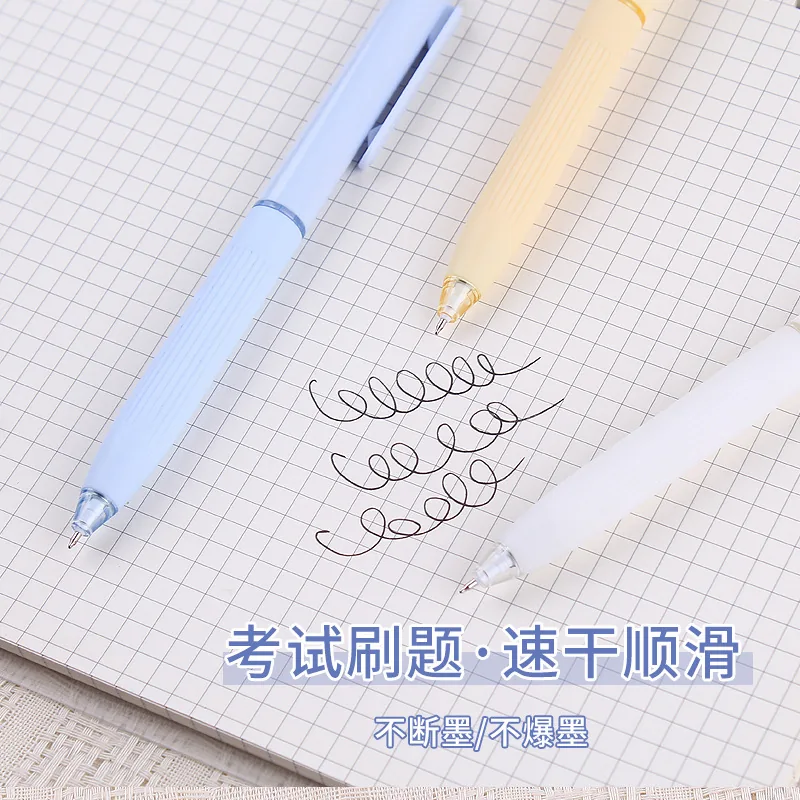
For left-handed writing, prioritize fast-drying ink, reliable flow and paper compatibility. A finer tip can reduce wet ink, but the smoothest choice depends on whether the writer pushes, hooks over or writes below the line.
A right-handed writer usually moves away from fresh ink. Many left-handed writers move their hand across the line they have just written, so even a smooth pen can leave ink on the hand and a blurred trail on the page.
In a recent r/pens discussion, left-handed users repeatedly emphasized quick drying—but they also disagreed about specific pens. That disagreement reveals the useful lesson: ink, paper and writing position must be tested together.
This guide was inspired by recurring user questions, including the Reddit discussion “Pen for Left-Handed Writers”. We independently summarized the topic and added practical product-selection guidance.
Drying time is the first test
A dark line is not helpful if it remains wet when the hand passes over it. Draw several lines, wait one, three and five seconds, then swipe with a clean finger. Repeat on the notebook paper used most often.
Quick-drying gel and hybrid inks can provide strong color with less smearing. Traditional oil-based ballpoint ink often dries quickly too, though the writing feel and darkness differ.
Tip size changes ink coverage
A 0.5 mm tip generally places a narrower line on the page than a 0.7 mm tip, which can reduce the amount of wet ink. However, very fine tips may feel scratchy or skip when a left-handed writer pushes the pen across the paper.
A smooth 0.7 mm ballpoint may work better for one writer, while another prefers a fast-drying 0.5 mm gel. Comfort and consistency matter as much as the number.
Paper can cause or prevent smudging
Ink dries partly by absorbing into paper. On coated, glossy or stone-style paper, ink can remain on the surface longer. More absorbent notebook paper may dry faster but can make a line spread or show through.
This is why online recommendations can conflict: two users may be testing the same refill on completely different paper.
Writing position matters
Left-handed writers are often described as overwriters, side-writers or underwriters according to where the hand sits relative to the line. An underwriter may avoid fresh ink naturally, while a side-writer is more likely to pass directly over it.
Turning the paper slightly and keeping the wrist below the line can help some students, but a comfortable natural posture is more important than forcing a dramatic change.
A five-minute left-handed pen test
Before buying a large pack, write a paragraph at normal speed, add a heading, underline a sentence and fill a small answer box. Check the side of the hand, the page and the back of the sheet.
- Does the line dry before the hand reaches it?
- Does the tip skip when pushed across the page?
- Can the writer maintain a relaxed grip?
- Does the ink feather or show through the paper?
- Is the line dark enough without excessive ink flow?
What wholesale buyers should specify
A product advertised as student-friendly should be evaluated with realistic writing tests, not only a packaging claim. Ask for tip size, ink color, writing length, sample availability and paper-based drying tests. When selling to left-handed users, avoid promising that one pen is completely smudge-proof for everyone.
BAIJIN can provide samples for buyers to test with the paper and writing conditions used in their target market before a bulk order is confirmed.
Explore related BAIJIN products
Compare a relevant model or contact our export sales team for samples, OEM options and current quotation details.
Product performance can vary with ink batch, paper, temperature and writing style. Test samples for your intended use. Examination rules and official document requirements must always be confirmed with the relevant institution.