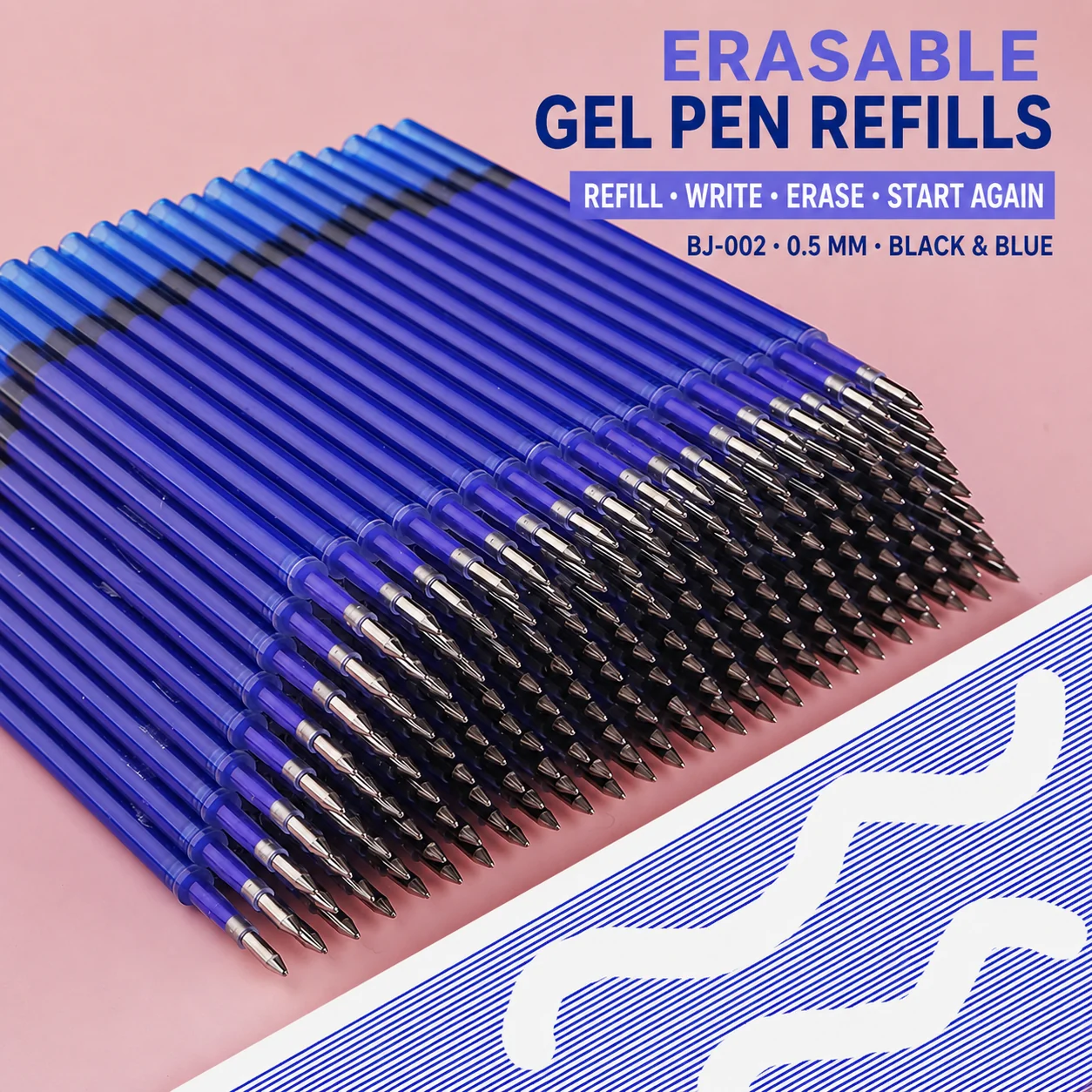
Gel pens usually skip because the tip cannot transfer ink evenly—even when ink is still visible in the refill. Common causes include skin oil on paper, incompatible paper coating, a poor writing angle, trapped air, dried ink at the tip, impact damage, cold storage or a depleted refill.
A pen that writes perfectly at the top of a page and starts skipping near the bottom can feel defective. Sometimes it is. Often, however, the pen is reacting to the surface, writing angle or how the refill has been stored.
Recent r/pens discussions repeatedly identified paper and invisible skin oil as overlooked causes. That is useful because it gives writers and quality teams a repeatable troubleshooting process instead of relying on aggressive shaking or heating that may damage the refill.
This guide was inspired by recurring user questions, including the Reddit discussion “Am I Cursed? Almost Every Pen Stops Writing When I Use It”. We independently summarized the topic and added practical product-selection guidance.
1. Skin oil can block ink transfer
A hand resting on the page can leave a thin film of oil that is difficult to see. Water-based gel ink may bead or skip when the tip reaches that area, especially near the lower half of a notebook page.
Place a clean scrap sheet under the writing hand and try again on a fresh area. If the skipping disappears, the pen may be working normally and the surface contamination is the main cause.
2. Paper texture and coating matter
Very smooth coated paper can resist absorption, while rough or fibrous paper may interrupt the rolling action of a fine tip. Dust, correction residue and glossy print areas can create the same problem.
Test the pen on two or three untreated papers. A refill that skips only on one notebook is more likely facing a paper-compatibility issue than a universal ink-flow failure.
3. Writing angle can reduce contact
The ball at the tip needs consistent contact with the page. At a very shallow or unusual angle, the metal edge around the ball can touch the paper before the ball rotates freely. This is more noticeable with some fine points and when a left-handed writer pushes the pen.
Try a slightly more upright angle without adding pressure. If the line returns, comfort and barrel shape should be considered alongside the refill specification.
4. Dried ink may seal the tip
A small amount of dried ink, paper fiber or dust can interrupt start-up after the pen has been unused. Gently wipe the tip with a clean, slightly damp cloth and make a few slow circles on scrap paper.
Do not use an open flame, boiling water or strong solvent. Excessive heat can deform plastic components, change heat-sensitive ink and create a leak.
5. Air gaps, impacts and storage can interrupt flow
A visible air gap can stop ink from reaching the tip. Dropping a pen tip-first may also damage the ball seat. Storing pens horizontally or tip-down according to the supplier's guidance can improve start-up, but a physically damaged tip usually needs replacement.
Cold conditions can increase resistance temporarily. Let the pen return naturally to room temperature before testing it again.
Why does a gel pen stop writing when it still has ink?
Visible ink does not guarantee that ink is reaching the ball at the tip. An air gap, dried ink, a damaged ball seat or ink that has thickened in cold storage can break the flow between the reservoir and the paper.
First test the pen on clean, uncoated paper and wipe the tip gently. Then check the refill for an air gap or leakage. If the pen still skips across several papers and writing angles, replacing the refill is safer and more reliable than heating, striking or dismantling it.
A safe eight-step troubleshooting check
Work from the simplest cause to the least reversible. This prevents damage and helps identify whether the issue belongs to the pen, the refill, the user or the paper.
- Remove any protective wax seal from a new tip.
- Try a clean sheet of ordinary uncoated paper.
- Keep a scrap sheet under the writing hand.
- Adjust the writing angle without pressing harder.
- Wipe the tip gently and make slow circles on scrap paper.
- Check the refill for ink level, air gaps or leakage.
- Allow a cold pen to return to room temperature.
- Replace the refill if the tip is damaged or the problem remains.
How wholesale buyers should test ink consistency
A purchasing test should include more than a short line from one sample. Select several units, write at different angles and speeds, and continue far enough down the page to expose oil or paper effects. Record start-up, skipping, drying and line uniformity separately.
BAIJIN can provide stock samples and product-specific specifications so buyers can evaluate refills and finished pens on the paper used in their market before a bulk order.
Common questions about Why Gel Pens Skip—and How to Fix It
Why does my gel pen keep skipping?
The most common causes are skin oil on the paper, incompatible paper coating, a shallow writing angle, dried ink at the tip, an air gap or tip damage. Test the pen on clean uncoated paper before assuming the refill is defective.
Why does my gel pen stop writing even though it still has ink?
Ink may still be visible while an air gap, dried tip, damaged ball seat or cold-thickened ink prevents it from reaching the paper. Gently clean the tip, test another paper and replace the refill if the problem continues.
Can skin oil make a gel pen skip?
Yes. A writing hand can leave an invisible oil film that interferes with water-based gel ink, especially near the bottom of a page. Place a clean scrap sheet under your hand and test a fresh area.
Should I heat a gel pen to make it write again?
No. Open flames, boiling water and strong heat can deform components, cause leakage and affect heat-sensitive erasable ink. Let a cold pen return naturally to room temperature and replace a damaged refill.
Explore related BAIJIN products
Compare a relevant model or contact our export sales team for samples, OEM options and current quotation details.
Product performance can vary with ink batch, paper, temperature and writing style. Test samples for your intended use. Examination rules and official document requirements must always be confirmed with the relevant institution.